Why More High-Earning Men Are Leaving Dating Apps for Professional Matchmaking

For years, dating apps were sold as the most efficient way to meet someone: low effort, endless options, optimized for busy lives.

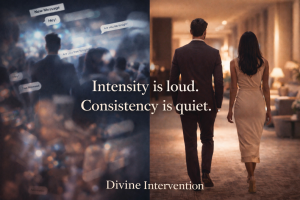
But behind the scenes, a different story is taking shape. For a growing number of high-earning, time-poor professionals, the experience is no longer efficient. It is noisy.

Over the past year, we have seen a clear shift among executives, founders, and accomplished professionals: fewer swipes, fewer chaotic conversations, fewer public profiles, and more interest in private, curated introductions.

In October 2025, Business Insider published an article titled “High-earning men are ditching dating apps for $25,000 matchmakers — here’s why” by Thibault Spirlet. It highlights a growing trend: wealthy men are stepping away from apps and investing in curated, human-led matchmaking instead.

The article spotlighted something many people sense but do not always say out loud: when your time is expensive and your privacy matters, the way you date starts to change.

It is a shift we are also seeing in our work with successful, commitment-minded singles across Vancouver, Calgary, Edmonton, Toronto, and beyond.

This is not about ego or status. It is about protecting time, emotional energy, and discretion.

What the Business Insider Article Highlighted

The Business Insider piece follows Grant Miller, a 39-year-old VFX executive who tried returning to apps like Tinder and Raya after a breakup. His takeaway was blunt: apps felt like a drain — high effort, low return. He eventually chose a luxury matchmaking agency instead.

The themes in the article are familiar to anyone who works with high-achieving clients:

  • Time and attention are limited. Swiping, filtering, and maintaining dozens of “maybe” conversations becomes a hidden second job.
  • App culture creates fatigue. Ghosting, superficial engagement, and low follow-through are common patterns.
  • Discretion matters more at higher visibility. The more public your role, the less appealing it is to have your photo and details circulating across multiple platforms.
  • Outsourcing is normal for high-responsibility people. Many professionals already outsource complex, high-stakes areas of life — tax, fitness, nutrition, legal. Dating is increasingly being treated the same way.

The article also touches on a psychological truth: high-achievers believe meaningful outcomes come from intentional investment. When something matters, they take it seriously.

Why High-Achieving Professionals Are Rethinking Apps

1. Time Is Their Scarcest Resource

When you add up:

  • Hours spent swiping and filtering
  • Conversations that never convert into dates
  • Last-minute cancellations
  • First meetings that clearly are not aligned

The real cost becomes obvious.

If you priced your dating time at your actual hourly value, the “free” option stops looking free.

2. Emotional Burnout Is Real

Many high-functioning professionals carry a lot — teams, clients, family logistics, decision fatigue.

When dating becomes:

  • Inconsistent communication
  • Breadcrumbing
  • Repeated surface-level conversations
  • Ambiguity that never resolves

It does not just feel disappointing. It feels draining.

By the time someone reaches out to a matchmaker, they are often not just tired of apps. They are tired of chaotic dating.

3. They Want Quality, Not Volume

Unlimited options quickly become decision fatigue.

  • Fewer introductions, better curated
  • Shared values and similar life stage
  • People who are genuinely relationship-ready
  • A process that feels calm, not frantic

They are not impressed by volume. They are looking for alignment.

4. Privacy and Discretion Matter

For executives, entrepreneurs, and public-facing professionals, privacy is not a luxury.

It is risk management.

A confidential, human-led process often feels more aligned with how they handle other sensitive areas of life: quietly, carefully, and with control.

What Professional Matchmaking Provides (When Done Well)

The premium value is not just better dates.

It is a better process.

  • A curated search instead of a public marketplace
  • Screening for emotional maturity and readiness
  • Structure and feedback to improve clarity
  • Fewer introductions with higher compatibility

For high-responsibility people, that is the real luxury: reduced friction and higher-quality signal.

What This Means for Accomplished Singles in Canada

While the Business Insider story focuses on US and UK firms, the shift is just as relevant here.

Across Vancouver, Calgary, Edmonton, Toronto, and beyond, we are seeing more:

  • Executives and founders seeking true equals
  • Divorced professionals wanting to avoid repeating patterns
  • High-achieving women and men who are done spending limited time on low-effort conversations

This trend is not about wealthy men buying better dates.

It is about commitment-minded people deciding their love life deserves the same strategy and discernment they bring to everything else.

If You Are Considering a More Intentional Approach

If you recognized yourself in any of the frustrations above, you are not alone.

Here are three important questions:

  • Am I getting the quality of dates and follow-through I actually want?
  • How much time and emotional energy am I spending on dating, and what is it returning?
  • Do I want to keep dating the same way, or am I ready for a more private, structured process?

At Divine Intervention Matchmaking, we work with accomplished, commitment-minded singles who value:

  • Curated, high-quality introductions
  • Emotionally intelligent guidance
  • Discretion and a calmer path to partnership

If you are curious what a confidential matchmaking process could look like, the next step is a private conversation.

Book a confidential consultation to explore whether curated, human-led matchmaking is the right fit for you.

Source Credit

Business Insider: “High-earning men are ditching dating apps for $25,000 matchmakers — here’s why” by Thibault Spirlet, published October 12, 2025. Subscription may be required.

The Valentine’s Week Survival Guide for Singles

A Playbook for Staying Open and Emotionally Steady

Written by Diana Cikes

Valentine’s Day isn’t the problem. Valentine’s Week is.

It’s the stretch of time where social feeds get louder, conversations get more loaded, and a perfectly normal Sunday can suddenly feel like an assault on your personal life. Even accomplished, grounded people—who make hard decisions for a living—can find themselves reacting in ways that don’t match their standards.

This isn’t a “treat yourself” article. It’s a playbook for how to move through Valentine’s Week with self-respect, emotional steadiness, and the kind of dating choices you’ll be proud of later.

The goal isn’t to “survive” with distractions. It’s about staying open—and collected.

The real pressure (and why it hits smart people)

Valentine’s Week compresses three things into one:

  1. Comparison (everyone looks paired-off online)
  2. Urgency (“Maybe I should just give that person a chance…”)
  3. Visibility (it’s harder to hide from wanting partnership)

High performers are especially susceptible to a specific trap: treating discomfort like a signal to fix it fast. And in dating, “fast fixes” usually look like:

  • entertaining someone you’re not genuinely aligned with
  • rushing intimacy to reduce uncertainty,
  • or reopening a door you closed for a reason.

If your standards matter for the other 51 weeks of the year, they matter now too.


The Valentine’s Week Protocol: 6 Moves

1) Reduce exposure for 72 hours

You don’t need to “power through” your algorithm.

For three days around Valentine’s, limit the inputs that trigger comparison and distorted thinking:

  • Mute the couples content you know will hit you.
  • Take social media off your phone for the evening.
  • Don’t scroll in bed.

This isn’t avoidance. It’s signal control. You’re protecting your nervous system so you can make decisions from clarity, not from a spike.

Simple rule: If it makes you reactive, it’s not entertainment—it’s interference.

2) Don’t shop emotionally

Valentine’s Week is prime time for “emotional shopping”: panic-swiping, saying yes to a date you don’t want, reviving a lukewarm thread, or entertaining someone because they’re available.

Before you agree to anything this week, run a quick filter:

  • Am I curious about this person—or just uncomfortable tonight?
  • Would I say yes on a random Tuesday?
  • Is this choice moving me toward the relationship I want, or toward temporary relief?

If the answer is relief, it’s not a plan. It’s a reaction.

3) Choose one nourishing plan (not five distractions)

A lot of singles try to “win” Valentine’s Week by staying constantly busy. That can work short-term, but it often leaves you feeling more empty—because distraction doesn’t create fullness, it delays the feeling.

Pick one plan that actually supports you:

  • Dinner with a close friend who knows the real you
  • Join or plan a singles’ friend group get together.
  • Treat yourself to fabulous food from one of your favourite restaurants.
  • Have an early night with a book and a great workout the next morning.
  • Take a long walk + a call with someone steady.
  • Treat yourself to something that will make you feel special – maybe there’s something you’ve been eyeing – and now’s the time to say yes.
  • Join a new group that you’re interested in (club, association, etc.).
  • Celebrate the love you do have in your life and acknowledge your friends and family who make your life better.
  • Do something nice for someone else and make their day. A card, flowers, chocolates, or a bottle of wine lets them know you’re thinking of them and makes them feel special. 

Nourishing doesn’t mean dramatic. It means restorative.

4) Set a text policy (especially for exes and “maybes”)

Valentine’s Week can have a strange effect: people reach out.

Sometimes it’s genuine. But more often, it’s loneliness, nostalgia, or convenience.

Your job isn’t to decode their psychology in real time. Your only job is to protect your standards.

Here are two clean scripts you can use:

If an ex texts:
“Thanks for reaching out, however this chapter is closed for me. Wishing you well.”

If a vague ‘maybe’ pops back up:
“Nice to hear from you. I’m dating with purpose. If you’d like to take me on a real date, suggest a time and place.”

If they can’t meet clarity with clarity, you’ve got your answer.

5) Practice “open standards”: warm, direct, and paced

High standards don’t require coldness. But they do require clarity.

This week, your edge is open standards:

  • You stay warm.
  • You stay direct.
  • You don’t audition for anyone.
  • You don’t rush intimacy to create certainty.

If you’re dating someone new, let pacing do the work. A relationship worthy of you can tolerate steadiness.

Try this line early in conversation (it’s simple, but it changes the tone fast):

“I’m in a good place in life and looking for something real. I care about how a connection feels—but I also pay attention to consistency and character.”

It signals maturity, and filters out people who want casual access with no accountability.

6) Do one action that supports your actual goal

This is the part most people skip.

If you want a committed relationship, the best antidote to Valentine’s Week anxiety is strategic action—not frantic action.

One meaningful step could be:

  • Revisiting non-negotiables (values, lifestyle, kids, timelines)
  • Asking a trusted friend to make a real introduction (not “someone to chat with”)
  • Upgrading your approach from “hope and effort” to being proactive.

If you’ve been dating through volume and burnout—endless first dates, endless messaging, repeated mismatches—Valentine’s Week is a useful checkpoint:

Do you want more activity, or better outcomes?

Because those aren’t the same.

A quick reality check: three questions that keep you honest

If you feel the Valentine’s Week squeeze, answer these questions:

  1. What kind of relationship am I looking for?
  2. What am I no longer willing to tolerate?
  3. What would a good match look like this week?

The point isn’t to be perfect. It’s about alignment and mutual fit.

Closing thought: this week doesn’t get to define you

Valentine’s is a commercial occasion. Not a deadline.

The people who end up in truly strong relationships aren’t the ones who panic when the calendar gets loud. They’re the ones who stay clear, stay warm, and keep making high-quality choices—even on the hard weeks.

If you want fewer dates and quality, vetted introductions 

Divine Matchmaking is for accomplished singles who don’t want volume—they want curated introductions with relationship-ready people, handled discreetly and intentionally.

👉 Book a private confidential consultation if you’d like support applying these standards or are ready for curated introductions.

Chemistry vs Compatibility: Stop Chasing Fireworks (The Truth About “The Spark”)

Written by Diana Cikes

You know the feeling: instant pull, intense eye contact, a date that feels like it’s happening in high-definition.

And then… you’re checking your phone too often. Replaying every moment. Wondering if you said the wrong thing. Feeling oddly “on,” slightly on edge—yet telling yourself, this must be chemistry.

For high-achieving, commitment-minded singles, this is one of the most common (and costly) dating misreads: confusing chemistry vs compatibility.

This isn’t about denying attraction or forcing yourself to “like someone nice.” It’s about learning to tell the difference between “fireworks” and real connection:

  • Fireworks (intensity, uncertainty, emotional rollercoasters)
  • Real connection (warmth, respect, mutual effort, and a steady pull that grows)

Let’s make it practical—and grounded.

What People Mean When They Say “I Want the Spark”

When most people say they want “the spark,” they usually mean:

  • Instant chemistry
  • A magnetic pull
  • “I just knew”
  • A date that feels effortless and electric
  • A sense of destiny (or urgency)

Pop culture trained us to believe love arrives like a lightning strike.

But in real life—especially when you’re dating for partnership—instant intensity isn’t proof of compatibility. Sometimes it’s just proof your nervous system noticed something familiar.

Chemistry vs Compatibility: What’s Actually Happening in Your Body

That “I can’t stop thinking about them” feeling is often not intuition. It’s your nervous system responding to cues—especially if you’re used to being high-functioning, independent, and emotionally capable.

1) Familiarity can feel like fate

If you’ve experienced dynamics like inconsistency, emotional distance, or proving yourself, your system may interpret similar cues as “important.”

Not because they’re good—because they’re familiar.

2) Uncertainty creates a dopamine loop

When someone is warm one moment and vague the next, your brain can get hooked on the reward pattern:

Maybe this time I’ll get clarity.

That can feel like passion, but it’s often intermittent reinforcement—the same mechanism that makes anything unpredictable more compelling.

3) High-achieving people are especially vulnerable

If you’re used to solving problems, dating can become a puzzle:

  • “What do they mean by that?”
  • “How do I get them to choose me?”
  • “What’s the right move?”

That chase can masquerade as connection—but it often has more to do with activation than alignment.

Fireworks That Are Actually Red Flags

“Fireworks” often show up alongside subtle instability. Not always dramatic—sometimes it’s polished, charming, and hard to name.

Inconsistent behavior you keep explaining away

  • Great date → vague follow-up
  • Intense texting → disappears for days
  • Future talk → no actual plans

If the behavior doesn’t match the energy, that’s not romance—it’s confusion.

Hot-cold pursuit

They come in strong, then pull back. You feel relief when they return.

That relief can be mistaken for “how much you like them,” when it’s actually your system trying to regulate.

You feel on edge… but label it “chemistry”

Pay attention to internal cues:

  • Tight chest
  • Racing thoughts
  • Over-analyzing
  • Urge to perform
  • Restless, nervous energy

Healthy attraction can be exciting. But it shouldn’t feel like self-abandonment.

What Healthy Attraction Feels Like Instead

If you’re serious about partnership, it helps to redefine what “good chemistry” looks like.

Stable, emotionally mature attraction often feels like:

  • Warmth: you feel liked, not evaluated
  • Ease: you can be yourself without “managing” the moment
  • Curiosity: you want to know them, not win them
  • Consistency: communication and effort are steady
  • Calm interest: grounded desire to see them again (not obsession after one date)

You can still feel butterflies, but they’re not paired with dread.

Healthy chemistry feels like clarity with a pulse.
Not intensity with a question mark.

That’s the real upgrade in the chemistry vs compatibility conversation.

How to Recalibrate Your “Spark” Meter (Without Overthinking)

If your spark detector has been trained on chaos or uncertainty, you don’t fix it by thinking harder.

You recalibrate by checking evidence—and listening to your body.

Step 1: Do a 5-minute post-date debrief (no spiraling)

Ask yourself:

Body

  • Did I feel more settled as the date went on—or more activated?
  • Did I breathe normally?
  • Did I feel safe to be honest?

Mind

  • Do I like them… or do I like the way I felt being chosen/seen?
  • Am I curious about who they are—or fixated on what they think of me?

Evidence

  • Did they show consistency, respect, and follow-through?
  • Did they ask questions and build connection—or perform charm?

The 3Cs Check (simple scoring tool)

Rate each from 1–10:

  • Character (how they show up)
  • Consistency (do words match actions?)
  • Compatibility (values, lifestyle, pace, relationship readiness)

If the “spark” is a 10 but the 3Cs are a 4… that’s a data point.

Step 2: Give slow-burn potential a fair chance (with boundaries)

Not every calm connection is “the one.” But many high-quality partnerships build over 2–4 dates, not one.

Use this guideline:

  • If they’re respectful, consistent, and you feel reasonably at ease, give it 2–3 dates before ruling it out.
  • If you feel anxious, confused, or destabilized, do not override that just because the chemistry is strong.

This is where chemistry vs compatibility becomes real: you’re choosing what creates safety and attraction.


Step 3: Use scripts that protect your pace (and your self-respect)

If they’re moving too fast:
 “I’m enjoying getting to know you. I move best with steady pacing—let’s take this one step at a time.”

If they’re vague about intentions:
 “I’m dating intentionally and looking for a real partner. How are you approaching dating right now?”

If effort drops and you feel yourself chasing:
 “I’m looking for consistency. If you’re not in a place to build something steady, I’m stepping back.”

Calm. Clear. No drama.

Why Matchmaking Helps When You’re Done With the Rollercoaster

One reason “fireworks” become a pattern is that modern dating environments can reward intensity over integrity.

You meet a lot of people who are charming, ambiguous, or emotionally unavailable—and your nervous system gets trained to chase uncertainty.

High-end, human-led matchmaking changes the inputs:

  • Curated introductions to emotionally ready, commitment-minded singles
  • Less time decoding mixed signals
  • More time assessing true compatibility (values, lifestyle, long-term vision)
  • Coaching support so you choose love that feels steady—not addictive

It’s not a last resort. It’s a strategic choice for people who value their time, privacy, and emotional peace.

A More Grounded Kind of Chemistry

If you’ve been conditioned to equate intensity with love, calm can feel unfamiliar at first. But remember this:

Unfamiliar doesn’t mean wrong—sometimes it means health.

This year, consider choosing what chooses you back—clearly, consistently, and with care. If you want support recalibrating your “spark” meter—and meeting people who are actually ready—Divine Intervention Matchmaking is here.

👉 Book a confidential consultation if you’d like support strengthening your filter so you can start meeting people who are aligned in values, pace, and intention.

Break Your Dating Patterns in 30 Days: A Reset for Busy Professionals

If you’re honest, your love life probably doesn’t suffer from a lack of effort.

You’ve dated, tried apps, said yes when you were tired, given people the benefit of the doubt—and maybe stayed longer than you should have because you saw potential.

Yet somehow, you keep landing in the same place:

  • The same type of person in a slightly different package
  • The same pace (too fast to confusion, or too casual to disappointment)
  • The same feeling that you’re tolerating more than you want

This isn’t because you’re broken or bad at dating.
Most of the time, it’s because you’re running old patterns on autopilot.

We’ve designed this 30‑day challenge for high‑achieving singles—entrepreneurs, founders, and senior professionals—who want to stop repeating cycles and start choosing differently, without turning dating into a full‑time job.

How This 30‑Day Challenge Works (Read This First)

This is not about perfection or dramatic overhauls. It’s about awareness combined with small, deliberate changes that interrupt autopilot.

You’ll focus on one clear goal each week:

  • Week 1: Notice your pattern
  • Week 2: Choose differently
  • Week 3: Slow the pace
  • Week 4: Raise your standards

If you only have 10 minutes a day, that’s enough.

One rule for the entire challenge:
Don’t use new habits to impress anyone. Use the habits you develop to protect your time, energy, and future.

Step 1: Set Your Baseline (Do This Once – 10 Minutes)

You don’t need to be actively dating someone to do this step.

Your baseline isn’t about a specific person—it’s about creating a neutral decision framework so future choices feel objective instead of emotional. Think of this as setting your “default dashboard” before new data comes in.

First: choose your non‑negotiable outcome

Before you track anything, get clear on what you’re actually dating for.

Pick the statement that’s true right now:

  • “I’m dating for a committed relationship.”
  • “I’m dating for marriage and family.”
  • “I’m dating for a stable, long‑term partnership.”

This matters more than people realize.
Unclear goals create fuzzy decisions. Fuzzy decisions are where old patterns survive.

Next: reflect briefly on your recent past

If you’ve dated at all in the last year, answer these from memory:

  • Did I usually feel clear about where I stood early on—or confused?
  • Did actions tend to match words—or drift apart?
  • Did dating leave me mostly energized—or quietly drained?

No judgment. You’re just noticing your starting point.

Finally: define how you’ll track future interactions

Once you start talking to or seeing someone—even a first call or date—you’ll use the same three metrics every time.

After any meaningful interaction, ask:

  • Clarity: Do I know where I stand right now? (Yes / No)
  • Consistency: Do their actions match their words so far? (Yes / No)
  • Cost: Do I feel energized or drained afterward? (Energized / Neutral / Drained)

Here’s an important reframe to anchor this:

You shouldn’t have to wonder where you stand. When someone is genuinely interested, their actions make it clear. They make time, and they follow through. Even if they’re busy, there are regular check‑ins and a sense of forward movement.

Confusion isn’t chemistry. It’s information.

That’s it. No spreadsheets. No overthinking.

This baseline becomes your anchor for the rest of the 30 days.

Week 1: Notice the Pattern (Days 1–7)

This week’s goal: Awareness, not action.

Most dating cycles don’t start with the wrong person.
They start with a familiar feeling.

Do a simple pattern audit. Answer these honestly:

  • Who do I tend to choose? (charming, intense, avoidant, needs fixing, ultra‑independent)
  • What do I usually ignore early?
  • What story do I tell myself to override my gut?
  • What role do I play? (rescuer, over‑giver, pursuer, performer, avoider)

Identify your autopilot triggers. Common ones for high‑achievers:

  • Chemistry that feels like adrenaline, not calm
  • Hot‑and‑cold availability
  • Someone impressed by your success but lacking real capacity
  • The pull toward a “project” instead of a partner

Daily action (2 minutes):

After any date, call, or meaningful text exchange, write one sentence:

“My body felt ___.” (calm, anxious, activated, steady, drained, energized)

Your body often tells the truth before your mind rationalizes it.

Week 2: Choose Differently (Days 8–14)

This week’s goal: Interrupt the moment you normally default to old choices.

Use the Two Options Rule.

Whenever you feel attraction or momentum, force yourself to identify:

  • Option A: Who I would normally choose
  • Option B: Who actually fits my stated goal

Option B may feel quieter at first. That’s not a flaw.

Ask adult questions early (without interrogating). Choose 2–3 across the first couple of dates:

  • “What does a good relationship look like to you day‑to‑day?”
  • “How do you handle conflict?”
  • “What are you making room for in your life right now?”
  • “What does commitment mean to you at this stage?”
  • “How do you manage consistency—are you structured or flexible?”
  • (If relevant) “How does parenting fit into your life and schedule?”

Rule for this week:

If someone can’t answer adult questions with adult clarity, don’t translate for them.

Week 3: Change the Speed (Days 15–21)

This week’s goal: Replace intensity with consistency.

High performers often move fast—and accidentally bring that pace into dating.

Use a 72‑hour pause for big escalations. No major decisions within 72 hours of a high‑chemistry moment:

  • exclusivity
  • trips
  • meeting kids
  • major emotional disclosures
  • future plans that create pressure

This isn’t about playing games. It’s about making grounded decisions.

Ask yourself:

  • Do I feel calm between dates?
  • Are we building something predictably—or reacting emotionally?

One simple action:

Set one clear expectation per connection:

“I’m free Tuesday or Thursday. Let’s pick one.”

Reliable adults respond well to clarity.

Week 4: Raise Your Standards (Days 22–30)

This week’s goal: Stop tolerating behavior you wouldn’t advise a friend to accept.

Standards aren’t what you want. They’re what you allow.

Define your minimum standards (choose five):

  • Plans don’t constantly float or fall apart
  • Communication is steady and respectful
  • They can repair after tension
  • Effort matches effort
  • You’re not hidden or kept vague
  • They have real capacity (time, emotional bandwidth, integrity)

Watch for quiet red flags that matter:

  • Ambiguity that benefits them
  • Inconsistent availability with endless explanations
  • Boundary testing when you ask for clarity
  • Fast intimacy + slow commitment
  • Chaos framed as “passion”

Practice the clean exit once, if needed:

“I’ve enjoyed getting to know you. I’m looking for something more consistent, and I don’t think we’re a fit. Wishing you the best.”

No debate required.

If You’re Dating After Divorce or With Kids

Add these two standards:

  • Respect for your schedule and responsibilities
  • Emotional steadiness (no drama to feel close)

One pacing rule:

  • No introductions to kids until consistency is proven, not promised.

What Success Looks Like After 30 Days

You don’t need a relationship at the end of this challenge.
You need evidence you’re choosing differently.

Success looks like:

  • Ending mismatched connections sooner
  • Asking for clarity earlier
  • Feeling calmer while dating
  • Confusing chemistry less with compatibility
  • Filtering for capacity, not potential

That’s how new patterns stick.

Support for Applying This in Real Life

If this challenge clarified one thing—that you don’t need more dates, just a better process—you’re not alone.

At Divine Matchmaking, we work privately with accomplished, commitment‑minded professionals who want to date with more discretion, stronger filtering, and far less wasted time.

👉 Book a confidential consultation if you’d like support applying these standards or are ready for curated introductions.

5-Step Dating Strategy for the New Year

Written by Diana Cikes

You don’t need another “This is the year I finally find love” resolution. What you need is a dating strategy that respects your time, your responsibilities, and the life you’ve already built.
 
If you’re a high-performing, commitment-minded single, your problem usually isn’t effort—you already know how to show up, work hard, and make things happen.
 
Here’s the real issue:
 
You’re applying structure and strategy to every area of your life except your love life.
 
At the start of this New Year, instead of promising yourself you’ll “try harder,” try something different: a simple, honest strategy that fits your actual life.
 
Below is a skimmable guide you can come back to whenever you feel yourself drifting into panic, pressure, or autopilot. This is a dating strategy for busy professionals who want a committed relationship without wasting time.

Why Dating Resolutions Usually Fail (Especially for High Performers)

Most dating resolutions sound like:
  • “I’ll put myself out there more.”
  • “I’ll say yes to more dates.”
  • “I’ll give the apps one more shot.”
The problem? They’re built on vague willpower, not on how your life truly works.
 
Resolutions fail because they:
  • Ignore your real bandwidth (time, energy, emotional capacity)
  • Don’t change your strategy—just your intentions
  • Push you into short bursts of effort instead of sustainable action
You don’t run your career or business this way, so you shouldn’t run your love life this way either.
 
A dating strategy isn’t “try harder.”
 
It’s: “Given the life I actually have, what’s the smartest way for me to meet aligned people?”

Step 1: Get Honest About Your Real Capacity

Before you decide how to date, be honest about what your life can realistically hold.
 
Ask yourself:
  • Time:
    On a typical week, how many hours can I genuinely give to dating without resenting it?
    (Not your fantasy schedule. Your real one.)
  • Energy:
    When in my week do I actually have energy for connection?
    (Not after a 12-hour day and a red-eye flight.)
  • Season:
    Am I in a season of building (career, business, kids, caregiving)?
    How does that affect what kind of relationship I can actually sustain?
If your calendar can’t support your dating goals, your strategy is lying to you.
 
Here’s a simple rule:
 
Start with your capacity, then choose your strategy. 
 
Not the other way around.
 
Even if your answer is, “I can realistically give this 2–3 hours a week,” that’s valuable information. You can work with that—intentionally.

Step 2: Define What “Aligned” Actually Means (For This Version of You)

High-achievers often say they want an “equal partner,” but rarely take the time to define what that means now.
 
Ask yourself:
  • Values:
    What actually matters more than chemistry?
    (Emotional maturity, follow-through, family orientation, lifestyle, faith, money attitudes, etc.)
  • Life logistics:
    Do our schedules, life stage, and responsibilities have a chance of fitting together?
    Or would we live in two different worlds?
  • Emotional experience:
    How do I want to feel in my relationship most of the time?
    (Safe, energized, calm, respected, challenged, playful?)
  • Non-negotiables vs. preferences:
    What are my true non-negotiables?
    What is just preference or habit?
An “aligned” relationship is one where:
  • Your core values line up—things don’t just look good on paper
  • Their life can genuinely fit with yours
  • You feel emotionally safe being your full self
If you can’t describe what aligned looks like, you’ll keep chasing chemistry and calling it compatibility.
 
Take five minutes and write:
 
“A relationship that fits my real life looks like…”
 
Let it be specific, honest, and based on who you are today, not who you were ten years ago.

Step 3: Choose Your Dating Channels on Purpose (Not on Autopilot)

Apps are a tool, not a strategy. So are introductions through friends, events, hobbies, and matchmaking.
 
Look at the main channels available to you and decide:
 
“Given my time, energy, and goals, which of these makes the most sense for me this year?”
 
Here’s a quick scan:
 
A. Dating Apps (If You Use Them at All)
 
They can make sense if:
  • You set hard limits (e.g., 2–3 intentional sessions per week, 20 minutes max)
  • You know what you’re screening for beyond looks and banter
  • You’re willing to say “no” faster when it’s not aligned
They don’t make sense if:
  • You already feel fried and resentful
  • You treat them like a full-time job
  • You end up in an endless loop of low-effort texting and no real dates
B. Organic / In-Person
 
Examples:
  • Professional networks
  • Interest-based events, classes, or communities
  • Friends-of-friends
This can work well when:
  • You’re in environments where people share your pace and values
  • You’re willing to be more open and approachable (eye contact, conversation, not just hiding behind your phone)

It’s slower, but often higher quality if you’re truly out in the right rooms.

C. Professional Support (Matchmaking, Date Coaching)
 
Matchmaking makes the most sense when:
  • Your time is scarce and valuable
  • You’re serious about avoiding emotionally unavailable people
  • You want fewer, better introductions—not volume
  • You’re ready to be honest about your patterns and preferences
Here, the “channel” is not just where you meet someone—it’s the entire process around how they’re vetted, how you’re supported, and how your love life fits alongside the rest of your world.
 
You don’t have to use every channel. In fact, you shouldn’t.
 
Pick 1–2 main channels and commit to them with clarity and boundaries, instead of half-heartedly attempting five at once.

Step 4: Set Boundaries That Protect You

A strategy without boundaries becomes more work, not less.
 
Decide in advance how you’ll protect your time and energy.
 
Some examples you might adopt:
  • No endless texting:
    “If we haven’t set a date after a week of chatting, I move on.”
  • No half-hearted situationships:
    “If they’re inconsistent, vague, or avoid labels, I don’t stay and try to convert them.”
  • No last-minute, low-effort plans:
    “I’m more of a plan-in-advance kind of person. Last-minute doesn’t really work for me.”
  • No ignoring your body’s data:
    “If I feel small, anxious, or drained around them, I listen to that.”
Boundaries are not walls; they’re filters.
 
They make sure your strategy brings you closer to what you want—instead of just consuming your time.

Step 5: Decide What Support You’re Willing to Receive

One of the quiet ways high performers sabotage their love life is by insisting:
 
“I should be able to figure this out on my own.”
 
You probably don’t do your taxes, legal work, or complex health plan alone. You bring in experts because your time and energy matter.
 
Love is no different.
 
Ask yourself:
  • “What am I no longer willing to do on my own?”
  • “Where could expert support save me time, emotional wear-and-tear, and dead ends?”
  • “Do I want to keep repeating my own patterns, or am I ready to be challenged and supported?”
Support can look like:
  • Therapy or coaching to shift patterns and build emotional safety
  • Matchmaking to curate who is in front of you
  • Online dating support so it stops feeling like a second job
Letting someone help doesn’t mean you’re incapable. It means you’re treating this area of your life with the same seriousness you give to everything else that matters.

A Different Kind of New Year Decision

You don’t need to become a different person this year—you need a different structure around how you date.
 
A dating strategy that respects your actual life will:
  • Honour your time and energy
  • Align with your values and pace
  • Bring you fewer, better, more compatible connections
  • Leave room for you to keep doing what you do best in every other area of your life
If you’re reading this and thinking, “I don’t want another year of winging it and hoping it works out,” that’s a sign you’re ready for something more intentional.
 
At Divine Intervention Matchmaking, we work with accomplished, commitment-minded singles across Vancouver, Calgary, Edmonton, Toronto and beyond who are ready for:
  • Curated, high-quality introductions
  • Honest, emotionally intelligent guidance
  • A calmer, more structured path to a relationship that actually fits their life
If this resonates, a simple next step is to have a conversation.
 
👉  Book a confidential consultation to explore whether our process is a fit for you and the kind of partnership you’re ready for.
 
You don’t need a louder resolution—you need a smarter strategy that finally treats your love life like a priority.